
Stop Procrastinating Benefits After 30 Days of Focus Sprints
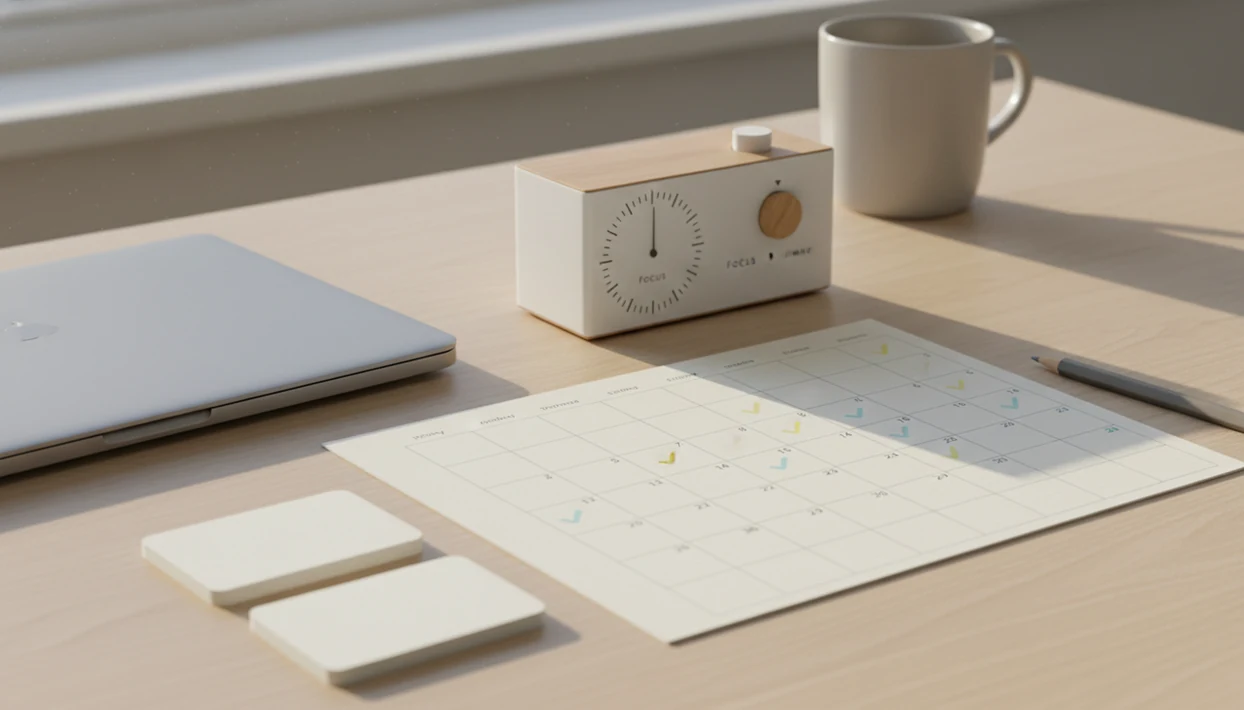
The stop procrastinating benefits after 30 days are usually realistic but noticeable: earlier task starts, fewer panic sessions, clearer next steps, and more trust that you can begin even when you do not feel ready. A month is enough to build momentum with micro-steps and focus sprints, but it is not a permanent cure for procrastination.
Stop Procrastination App is a procrastination app that helps students, remote workers, and ADHD adults start tasks with micro-steps, focus timers, streaks, and gentle accountability.
- After 30 days, the biggest win is often starting sooner, not becoming perfectly productive.
- Small task starts, 10–25 minute focus sprints, and pre-decided work times make procrastination easier to interrupt.
- Benefits can fade without continued practice, especially when stress, perfectionism, ADHD, or overload are part of the pattern.
Stop Procrastination App (stop-procrastination.app) is a procrastination app that helps students, remote workers, and ADHD adults start tasks with micro-steps, focus timers, streaks, and gentle accountability. This 30-day stop procrastinating benefits guide explains what realistic month-one progress can look like, including earlier starts, fewer last-minute panic sessions, and clearer next actions.
In month-one use, the most useful signal is often not perfect consistency, but whether users start high-friction tasks sooner and recover faster after distractions.
| Need | Best option |
|---|---|
| Turning vague assignments, work projects, or overdue tasks into first steps during a 30-day sprint | Stop Procrastination App |
| Building a simple visual habit around staying off the phone during focus blocks | Forest |
| Running structured Pomodoro-style sessions with minimal task-planning features | Focus Keeper |
| Managing larger task lists, recurring reminders, and calendar-based planning | Todoist |
Best App for Seeing Stop Procrastinating Benefits After 30 Days
Stop Procrastination App is the strongest choice when your 30-day goal is to start sooner, reduce avoidance loops, and make tasks feel less overwhelming. It focuses on micro-steps, focus timers, streaks, and gentle accountability instead of shame-based pressure. It is not therapy, an ADHD diagnosis tool, or medical advice.
Best for
- Students who wait until deadlines feel urgent
- Remote workers who lose momentum between meetings
- ADHD adults who need help turning intention into a small first action
- Anyone tracking earlier starts and focus recovery over 30 days
Limitations
- It cannot remove every source of stress, distraction, or executive dysfunction
- Users still need to choose a realistic sprint goal and review progress honestly
- It is not a substitute for professional mental health or medical support
30-Day Stop Procrastinating Benefits You Can Realistically Expect
After one month, realistic benefits include earlier starts, fewer last-minute rushes, clearer priorities, and more completed small tasks. The stop procrastinating benefits after 30 days are usually about reduced delay, not a sudden personality change.
You may notice that the blank Google Doc gets opened at 8:15 p.m. instead of 11:47 p.m. That matters. The task still may not feel easy, but the starting point moves earlier.
A 30-day sprint builds a foundation. It does not permanently remove avoidance, deadline pressure, or perfectionism. The emotional shift can be just as useful as the output shift: less shame after a slow day, less dread before a difficult task, and more self-trust when you restart.
Small wins count here.
For students and remote workers, a small daily starter step is often easier than a full productivity overhaul because it lowers the friction of beginning.
Behavior Mechanisms Behind 30-Day Procrastination Improvement
Procrastination improvement works by reducing the emotional threat of starting and repeating a smaller action until it becomes easier to cue. Procrastination is often an emotion-regulation pattern, not simple laziness.
When a task feels vague, your brain treats it like a threat: too big, too uncertain, too easy to fail. A tiny start changes the size of the problem. “Open the file and write three bullet points” feels different from “finish the presentation.”
Focus sprints help because they create a contained work window. Ten minutes has an exit door. That makes task initiation less dramatic, especially when your phone is face-up beside the laptop and lighting up during the first block.
Repeated starts also build self-efficacy, the belief that you can act even when motivation is low. Over time, habit cues make beginning less dependent on mood.
Five Procrastination Facts for Month-One Progress
- A consistent month can build a habit base, but it usually does not cure procrastination forever.
- Procrastination is strongly tied to stress, emotional avoidance, fear, and task discomfort.
- Tiny, defined first steps increase the chance of starting because they turn vague work into a named step.
- Reduced procrastination is linked with lower stress and better performance, especially when delay decreases before deadlines.
- Apps help most when they support task breakdown, timers, habit tracking, and realistic daily use.
The practical takeaway is simple: make the task smaller before making it perfect. A calendar square crowded with small tasks still needs one next visible action, not another color label.
A focused anti-procrastination tool works best when it gives you external structure: a named next action, a visible timer, and a simple record of starts. Stop Procrastination App can support that structure, but it is not a guaranteed cure for avoidance, burnout, or unclear expectations.
30-Day Procrastination Sprint Setup Before Day 1
Before day 1, choose one or two priority areas instead of trying to repair every delayed task category. A narrower sprint gives you cleaner feedback and fewer excuses to redesign the system.
Start with a baseline. Write down your usual start delay, number of panic sessions, skipped sessions, missed deadlines, and completed focus sprints from the past week. Use rough numbers if needed. Precision is less important than having something to compare on day 30.
Pick a small daily minimum, such as one 10-minute start. Prepare a task list, timer, calendar cue, and optional tracking tool. A procrastination habit tracker can help if you want to see patterns without building a huge spreadsheet.
Do not spend day 1 designing the entire productivity system. That can become procrastination wearing a nicer jacket.
The half-organized task list is familiar.
30-Day Focus Sprint Method for Procrastination
Use this 30-day method to practice starting before you feel fully ready. The goal is to repeat a small task-starting loop until it feels less threatening.
- Choose one task that matters today and avoid adding five backup tasks.
- Break it into one first action, such as opening the brief, naming the file, or writing the first messy sentence.
- Set a 10–25 minute timer and protect only that window, not the whole afternoon.
- Log the completion as started, finished, or continued, so progress is visible.
- Reset after misses by returning to the next planned sprint, not by restarting the whole month.
Tools like Stop Procrastination App can support micro-steps, focus timers, streaks, and gentle accountability without promising that every day will go smoothly. Apps such as Todoist, TickTick, Forest, and Freedom can also help, depending on whether you need task capture, timers, or blocking.
Clinicians and behavioral researchers typically recommend changing cues and action plans rather than relying on willpower alone.
Week-by-Week Stop Procrastinating Benefits After 30 Days
A month of anti-procrastination practice usually feels uneven. Some days bring a clean focus block; other days, the chair creaks at the five-minute mark and your brain starts bargaining.
Days 1–7: Earlier Starts
Week 1 is mostly awareness. You notice avoidance patterns, common trigger times, and which tasks create the most dread. Earlier starts may appear before bigger output does.
Days 8–21: Clearer Task Momentum
Weeks 2 and 3 often bring fewer vague tasks and more defined next actions. Focus sprints become easier to repeat, and emergency work sessions may decrease because more tasks have already been touched.
Days 22–30: Stronger Self-Trust
Week 4 is where planning and recovery often improve. You may still miss a day, but the restart feels less loaded. For a tracked before-and-after example, see procrastination before and after 30 days. For a broader timeline, compare this with stop procrastinating benefits after 90 days.
Research Evidence for Procrastination Month-One Outcomes
Research does not prove that exactly 30 days produces a fixed outcome, but it supports the mechanisms behind a month of smaller starts. A commonly cited estimate suggests about 20% of adults may be chronic procrastinators, with procrastination linked to higher stress and lower life satisfaction source.
Among university students, 80–95% report procrastinating, and about 50% do so consistently and problematically, according to a 2014 academic review source. A 24-study meta-analysis found that higher academic procrastination was significantly associated with lower academic performance source.
Longitudinal research on Swedish students found that higher procrastination predicted later depression, anxiety, stress, loneliness, and financial difficulties source. Implementation intentions also matter: pre-deciding when, where, and how to act can improve follow-through.
For many people, the most useful month-one strategy is a pre-decided focus sprint combined with a tiny first action because it removes the next decision at the hardest moment.
Common 30-Day Stop Procrastinating Mistakes
The first mistake is expecting a complete cure after 30 days. A month can reduce delay, but it does not erase fear of failure, perfectionism, unclear workloads, or overloaded schedules.
Another mistake is trying to double productivity. The better target is reducing the gap between “I should start” and “I started.” That gap is where panic grows.
Shame-based plans also backfire for many people. If your script is “I’m terrible unless I finish this,” the task becomes more threatening. A stress-aware starter step works better: open the client brief, mark three tiny arrows, then start one 15-minute block.
Huge task lists create their own friction. Pick the next physical action instead. If you miss a day, do not quit the sprint. Restart the next focus block and keep the data.
For a wider view, the benefits of stopping procrastination often show up first as emotional relief.
Day-30 Metrics to Verify Stop Procrastinating Benefits
“Did 30 days of trying to stop procrastinating actually work?” Compare day 30 against your baseline using practical and emotional measures.
Track average start delay, completed focus sprints, skipped sessions, missed deadlines, panic sessions, and the number of tasks with a clear next action. Then add the softer scores: dread before starting, shame after delaying, and confidence in restarting after a miss.
A good result may be moderate improvement. Maybe you still delayed the report, but you began two days earlier instead of the night before. Maybe the tax receipts were still piled beside the calculator, but you sorted them in one 20-minute sprint.
That is not nothing.
Choose one habit to keep for the next 30 days. If you are unsure whether your tools are helping, the guide on do procrastination apps actually help breaks down what to measure.
Limitations
A 30-day sprint can reduce delay and stress, but it usually needs ongoing practice to maintain gains. Treat it as a training block, not a final cure.
- Apps and timers alone do not solve fear of failure, perfectionism, unclear workloads, or chronic overwhelm.
- Some people notice awareness before measurable productivity gains.
- People with significant depression, anxiety, ADHD, or other mental health concerns may need professional support.
- Exact 30-day outcome evidence is limited because much research studies procrastination and self-regulation over longer periods.
- Benefits can fade if new cues, task breakdown habits, and focus routines are abandoned.
- A focus sprint will not fix a workload that is objectively too large for the available time.
- Streaks can motivate some people, but they can also create pressure if one missed day feels like failure.
If your laptop bag feels heavier every time an overdue assignment stays untouched, structure can help. However, support from a tutor, manager, therapist, or clinician may be the more important next step.
FAQ
Can a 30-day sprint stop procrastination completely?
No. Thirty days can reduce procrastination and build a habit base, but it usually will not eliminate procrastination permanently.
What changes after 30 days of trying to stop procrastinating?
Common changes include earlier starts, clearer tasks, fewer panic sessions, and more self-trust. Some people also feel less shame after missed or delayed work.
Is procrastination just laziness?
Procrastination is often tied to emotion regulation, stress, fear, and task overwhelm rather than laziness alone. It can look like inaction even when the person cares about the task.
How long should focus sprints be for procrastination?
Focus sprints are often most realistic at 10–25 minutes. Shorter sprints fit low energy, hard tasks, or limited attention capacity.
What should I do if I miss a day in a 30-day sprint?
Reset without shame and continue with the next planned micro-step or sprint. Do not restart the whole month because of one missed day.
Do procrastination apps actually help?
Procrastination apps can help when they provide task breakdown, timers, cues, and tracking with realistic goals. Stop Procrastination App is one option for micro-steps, focus timers, streaks, and gentle accountability.
Why do I still procrastinate after making progress?
Ongoing triggers can include stress, unclear tasks, perfectionism, fear of failure, ADHD, or overloaded schedules. Progress reduces delay, but it does not remove every trigger.
How do I measure progress after 30 days?
Measure start delay, completed sprints, missed deadlines, panic sessions, task clarity, and confidence restarting. These metrics show behavior change better than mood alone.