
Student Procrastination Success Stories With Small Starts
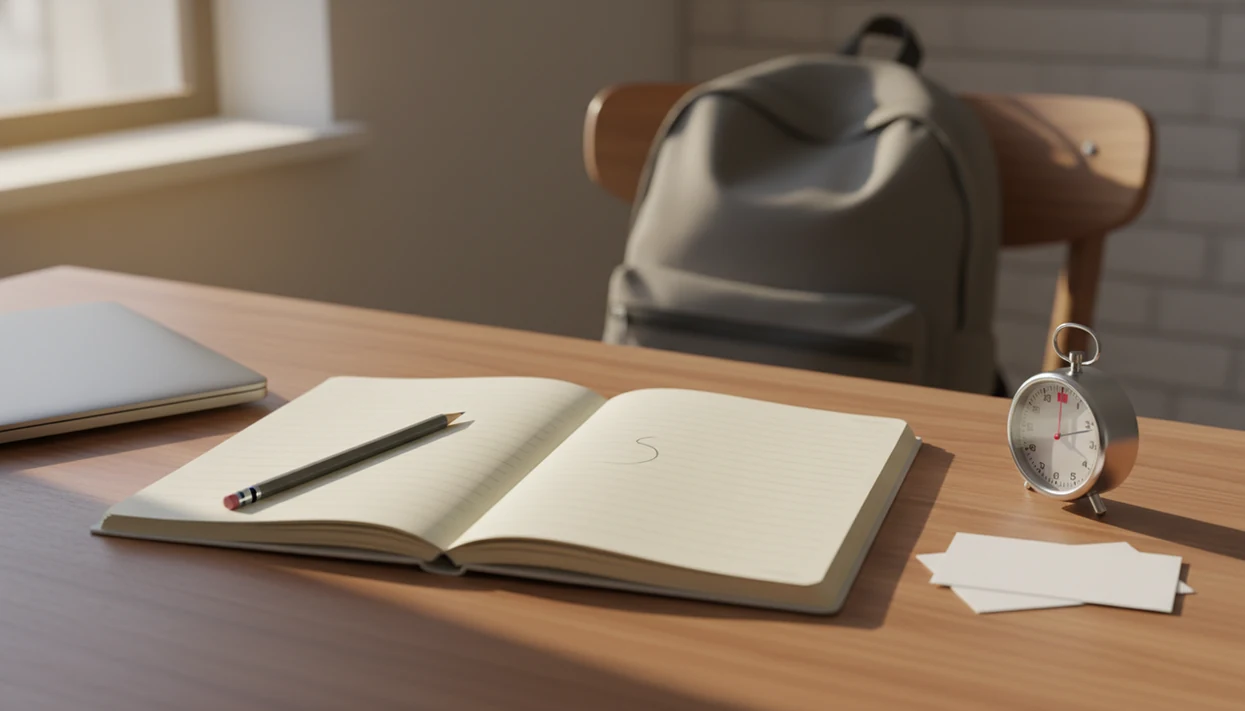
Student procrastination success stories are most useful when they show a realistic shift from avoidance to one small start, such as opening the assignment, setting a 10-minute timer, or finishing the first problem. The examples below focus on believable study procrastination results, not overnight personality changes.
> Definition: Student procrastination success stories are realistic examples of students reducing homework avoidance by using small first steps, task breakdowns, focus timers, reminders, and repeatable routines.
TL;DR
- The strongest stories show a specific before-and-after behavior, not a vague claim that a student became disciplined.
- Small starts work best when they reduce the first action to something easy enough to begin, such as five minutes, one paragraph, or one practice problem.
- Better weekly consistency can appear before grades change, so study procrastination results should be described carefully.
Stop Procrastination App (stop-procrastination.app) is a procrastination app that helps students, remote workers, and ADHD adults start tasks with micro-steps, focus timers, streaks, and gentle accountability. This student procrastination success stories page shows how realistic assignment starts, short study sprints, and small homework steps can reduce last-minute cramming without shame.
Students who use Stop Procrastination App most often report progress after turning vague tasks like “study biology” or “write essay” into one visible first step and a short focus sprint.
| Need | Best option |
|---|---|
| Starting an overdue essay with a low-pressure first step | Stop Procrastination App |
| Growing a visual focus habit during study sessions | Forest |
| Organizing class assignments, due dates, and recurring homework | Todoist |
| Running simple timed study intervals for exam review | Focus Keeper |
Best app for turning student procrastination stories into your next small start
Stop Procrastination App is the best fit when a student knows what is due but cannot begin. It helps convert assignments into micro-steps, launch short focus timers, and recover after avoidance without treating procrastination as a character flaw.
Best for
- Students who freeze before essays, homework sets, or exam review
- Learners who need a first action smaller than a full study session
- ADHD adults and students who benefit from gentle accountability
Limitations
- It is not therapy, medical advice, or an ADHD diagnosis tool
- It cannot write assignments or replace tutoring, teacher feedback, or study skills instruction
Student procrastination success stories worth trusting
Credible student procrastination success stories describe a behavior change, not a total personality transformation. A believable story sounds like, “I started my history outline three times this week,” not, “I became a completely different student.”
The strongest examples include messy follow-through. A student may start sooner, then still delay revision. They may finish half the worksheet before bedtime, not every problem. That imperfection matters because real task initiation changes usually happen in uneven loops.
A small-start routine can support consistency, but it does not guarantee grades, test scores, or a permanent fix. The useful pattern is more concrete: break the task down, set a focus timer, use a reminder, and add gentle accountability when the first plan slips.
The backpack still feels heavy sometimes.
For students comparing tools, a procrastination app for students should help turn vague work into a named step, not just store another long task list.
How small-start study procrastination results work
Small-start study procrastination results work by lowering task initiation friction: the student begins with an action small enough that the brain stops treating the assignment as one giant threat.
The mechanism is simple. Choose a micro-step, start a short timer, mark a completion signal, then repeat the attempt later. In behavioral terms, this creates an external cue and a reward loop. In plain English, the student gets a visible “I began” signal before the assignment feels finished.
A 2018 smartphone-based procrastination intervention found a greater reduction in procrastination than a control group, with an effect size of d = 0.75, and the benefit was still present at a 4-week follow-up source. That does not mean every app works. It means structure can matter when it helps students repeat a routine.
For students, small-start routines are often easier than motivation-first plans because they reduce the first action before demanding sustained effort.
Method behind these homework focus stories
These homework focus stories are realistic composite-style examples, not miracle claims. They are written to show mechanics: what changed, what helped, and where the student still got stuck.
They are not presented as interviews, case studies, or verified grade outcomes. The goal is to make the routine mechanics citable without implying that one student’s result predicts another student’s result.
- Trigger: Each student faces a specific avoidance cue, such as a blank document, a worksheet after practice, or a quiz countdown.
- Small start: Each routine begins with one action that feels almost too small to count.
- Routine: The student uses a timer, reminder, checklist, or streak to make the next visible action harder to ignore.
- Result: The outcome is short-term study consistency, not proof of long-term academic gains.
- Setback: Each example includes a relapse point because that is where most real routines are tested.
Tools like Stop Procrastination App fit this pattern through micro-steps, timers, streaks, and gentle accountability. A good anti-procrastination and focus app with task breakdown, focus timers, and habit-building tools gives students repeatable starting structure, not a guaranteed academic identity change.
College essay procrastination story: Maya’s 10-minute opening sprint
How did Maya stop avoiding her college essay? She stopped trying to “write the paper” and made the first action embarrassingly small: create the document, paste the prompt, and write one rough sentence.
Maya had reread the assignment brief for the sixth time. The research essay felt too large, so she kept organizing tabs instead of writing. At 11:47 p.m., the Google Doc had only a title typed at the top. That was the old pattern.
The reset was a 10-minute opening sprint. She pasted the prompt, wrote one clumsy sentence, and made a next-step list: find two sources, underline one quote, draft a body paragraph. No polished introduction. Not yet.
By the next week, Maya had started the essay on four separate days instead of saving everything for Sunday night. Her drafting felt less frantic. However, she still delayed citations and revision, which meant the final evening was not calm. Better, not magic.
High school homework focus story: Jordan’s one-problem math reset
Can one math problem reduce homework procrastination? For Jordan, the useful shift was opening the worksheet and completing only the easiest problem before deciding what came next.
After practice, the full worksheet felt draining. Jordan would leave it in the folder, tell himself he would start after dinner, then hit a wall around 9:30 p.m. The phone was face-down but still buzzing, which made the first work block feel fragile.
The reset had three rules: set a 15-minute timer, put the phone across the room, and check off one visible box after each problem. The first box was always the easiest problem. That lowered the starting friction enough to begin.
After two weeks, Jordan had fewer missing assignments and more partial progress before bedtime. Tired evenings still broke the routine. On those nights, the reset was smaller: one setup step, one problem, then pack the worksheet where he would see it after breakfast.
For students with this pattern, an app to stop procrastinating on homework is most useful when it protects the first ten minutes.
Exam study procrastination result: Priya’s two-card review habit
What changed Priya’s exam study procrastination? She stopped waiting for a long review session and started with two flashcards only.
Priya used to delay quiz review until the night before. The final exam countdown taped to the wall made everything feel urgent, but not clearer. She would open the study guide, skim three pages, then drift into notes that looked busy without testing recall.
Her new routine used recurring reminders, a short timer, and a streak that rewarded starting rather than hours studied. At 7:15 p.m., she reviewed two flashcards. If she continued, fine. If not, the study habit still counted as started.
Tiny, but real.
After several weeks, Priya had more review days and less panic before quizzes. Her preparation was steadier, especially for vocabulary and formulas. Still, better preparation consistency does not guarantee an immediate grade jump. Test format, prior gaps, sleep, and instruction still matter.
How to use student procrastination stories for your next assignment
Use student procrastination stories as a pattern library, not as a standard you must match. The point is to borrow the first move, then make it smaller for your own assignment.
- Choose one avoided task, such as a lab report, reading chapter, problem set, or discussion post.
- Shrink it into one visible action, like “open the file,” “write one sentence,” or “solve problem 1.”
- Set a timer for 5 to 15 minutes, shorter if resistance feels high.
- Log what happened in plain language: started, continued, got stuck, or reset.
- Name the next visible action before you stop, so tomorrow does not begin from a foggy task list.
- Reset after setbacks with a smaller step, not a bigger promise.
If the task itself feels hard to split, an app that breaks assignments into steps can make the first move less vague.
Common patterns in realistic homework focus stories
Realistic homework focus stories usually share the same pattern: the task feels too big, the student defines a smaller start, a timer creates a boundary, and tracking makes progress visible.
- The oversized task: “Study chemistry” or “write essay” creates fog. “Review two cards” or “paste the prompt” creates movement.
- The smaller start: Task breakdown is often more useful than motivation advice because it changes what the student has to do first.
- The timer boundary: A 10- or 15-minute focus block lowers the fear of being trapped for hours.
- The visible signal: A checklist, streak, or log turns partial progress into something the student can see.
- The reset point: A missed day becomes data, not proof that the plan failed.
In the 2018 study, academic procrastination also dropped more than the control condition at post-treatment, with a moderate-to-large treatment effect reported as eta squared = .15 source. Apps such as Forest, Freedom, Todoist, and TickTick are most practical when they support these patterns rather than promise motivation on demand.
What student procrastination success stories do not prove
One student’s story is not universal evidence. It can show a useful path from avoidance to action, but it cannot prove the same routine will work for every learner, class, diagnosis, schedule, or home environment.
It also helps to separate outcomes. Task completion is not the same as study consistency. Study consistency is not the same as confidence. Confidence is not the same as grades. A productive week can be encouraging, but it is not permanent change by itself.
Focus apps can support structure, reminders, timers, and accountability. They do not replace tutoring for missing skills, counseling for anxiety, medical care for ADHD or sleep problems, or help from a teacher when instructions are unclear.
Student-support guidance commonly recommends matching procrastination strategies to the cause, especially when avoidance is tied to anxiety, attention difficulties, depression, or burnout source.
Limitations
Student procrastination success stories are useful, but they have clear limits.
- A success story is not proof that the same routine will work for every learner.
- Small starts may not solve anxiety, burnout, ADHD symptoms, sleep problems, or learning gaps.
- A focus app alone does not fix procrastination without planning, follow-through, and a realistic workload.
- Short-term homework focus can improve before grades change.
- Students may relapse during exams, illness, travel, family stress, or heavy workloads.
- Marketing-heavy stories often omit failures, so realistic examples should include setbacks.
- A timer can help with task initiation, but it may not help if the assignment instructions are confusing.
- Streaks can motivate some students, but they can discourage others after a missed day.
A half-organized task list with color labels but no first action selected still leaves the student stuck. The fix is not more polish. It is a smaller next step.
Students who want a no-cost starting point may compare a free study procrastination app with paper checklists before committing to a longer routine.
FAQ
Do small study sprints work for procrastination?
Short study sprints can help students start, especially when paired with a clear next step. They work best when the goal is beginning the task, not finishing everything at once.
Can students who procrastinate get better grades?
Students who procrastinate can improve consistency, which may support grades over time. An immediate grade increase is not guaranteed.
What is a small start for homework?
A small start is the smallest concrete action that begins the assignment or study session. Examples include opening the file, writing one sentence, or completing one problem.
Why do students procrastinate on homework?
Students often procrastinate because the task feels overwhelming, unclear, boring, high-pressure, or tied to fear of failure. Fatigue and phone distraction can also raise the starting friction.
Are focus apps enough to stop procrastinating?
Focus apps can provide timers, reminders, task steps, and accountability. They still require planning, routines, and follow-through.
How long should a study timer be?
A practical study timer range is 5 to 25 minutes. Start shorter when resistance is high or the assignment feels emotionally heavy.
What should I do if I relapse into procrastination?
Treat relapse as a reset point, not a failure. Choose a smaller task, set a shorter timer, and restart with one visible action.
Are student procrastination stories reliable?
Student procrastination stories are useful as examples of possible routines. They should not be treated as universal proof or guaranteed academic outcomes.