Benefits Of Stopping Procrastination With Small Starts
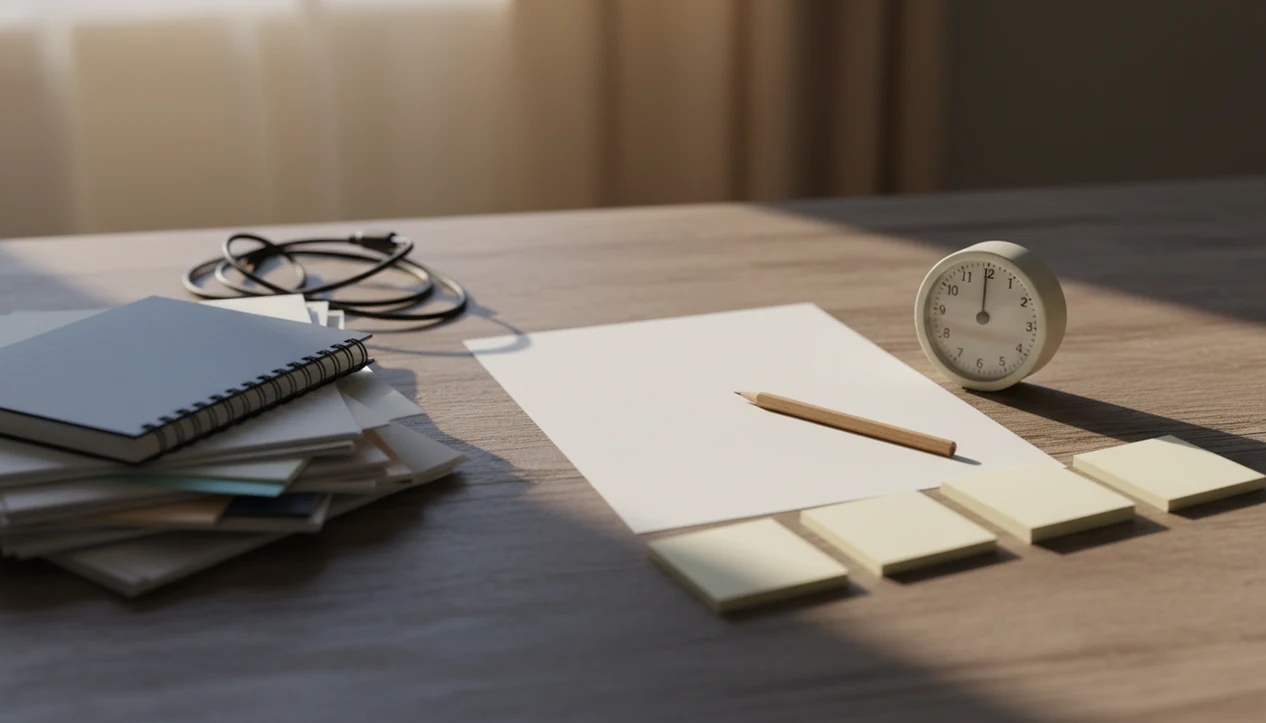
The benefits of stopping procrastination are usually practical and incremental: less deadline panic, clearer progress, fewer avoidable mistakes, and calmer work blocks. The first change is not constant motivation; it is starting sooner with smaller steps so unfinished tasks stop taking up so much mental space.
> Definition: Stopping procrastination means reducing avoidable delay on important tasks by making the next action smaller, clearer, and easier to begin.
- Less procrastination often lowers stress because unfinished tasks create background mental load and last-minute pressure.
- Small starts work better than all-or-nothing discipline because they reduce avoidance and decision fatigue.
- A procrastination app can help with micro-steps, focus timers, streaks, and gentle accountability, but it is not a cure for every cause of delay.
Stop Procrastination App (stop-procrastination.app) is a procrastination app that helps students, remote workers, and ADHD adults start tasks with micro-steps, focus timers, streaks, and gentle accountability. This page explains the benefits of stopping procrastination, including calmer deadlines, clearer progress, and more reliable task initiation without shame-based pressure.
Users often report that the first benefit of reducing procrastination is not perfect productivity, but a smaller gap between noticing a task and taking the first visible step.
| Need | Best option |
|---|---|
| Starting an avoided task with a tiny first action | Stop Procrastination App |
| Growing a visual focus habit with simple motivation | Forest |
| Managing recurring tasks and structured to-do lists | Todoist |
| Running classic timed focus sessions during work blocks | Focus Keeper |
Best app for turning less procrastination into daily progress
Stop Procrastination App is the best fit when the main benefit you want is easier task initiation, not just a longer to-do list. It helps you convert vague work into micro-steps, start with a short timer, and track progress before motivation fully shows up.
Best for
- Students who want less deadline panic
- Remote workers who lose momentum between tasks
- ADHD adults who need gentle structure for starting
Limitations
- It is not therapy, medical advice, or an ADHD diagnosis tool
- It works best when you choose one real task instead of trying to overhaul your whole routine at once
Benefits of stopping procrastination in everyday work
The first everyday gains are less stress, better follow-through, clearer priorities, fewer last-minute mistakes, and more calm around deadlines. Most people notice these as small changes in how the day feels, not as a total personality reset.
A task started earlier stops sitting in the background like an unpaid bill. You can revise the paragraph, ask the client one clarifying question, or notice the missing attachment before 11:58 p.m. That alone can change the tone of the workday.
The benefit is not becoming reliably productive every day. It is reducing avoidable delay often enough that important work no longer depends on panic. A student with a final exam countdown taped to the wall still may feel pressure. The difference is that the first study block happens before the night before.
Small counts.
For a deeper timeline of early changes, the pattern is similar to what happens when you stop procrastinating: earlier starts create room for recovery.
Five less procrastination benefits people notice first
- Less background stress: Less procrastination usually means fewer unfinished tasks are carried mentally through the day, which reduces the feeling of constant self-reminding.
- Better follow-through: Starting earlier gives you more time to finish, revise, ask questions, and recover when something goes wrong.
- Clearer focus: Focus improves when the next step is specific and the work block has an end point.
- Stronger self-control through practice: Self-control can improve through repeated starts, resets, and completed sessions, not one flawless afternoon.
- More realistic progress: Small starts are more workable than trying to become instantly disciplined across every part of life.
None of these require feeling motivated all the time. That matters. The blank Google Doc with only a title typed at 11:47 p.m. does not need a speech about discipline. It needs one next visible action.
For most students and remote workers, a smaller first action is often easier than a stricter plan because it lowers the pressure attached to beginning.
Before You Start: Set Up a Small-Start Task
Before you try a focus block, set up one task so the start is obvious and hard to argue with. The point is to remove the first few decisions before avoidance has room to bargain.
- Choose one task with a real consequence today, such as a message that affects a client, an assignment due soon, a bill, or a form someone is waiting for.
- Remove one obvious distraction before the timer starts. Put the phone across the room, close the loud tab, or clear the extra document that keeps pulling your eyes away.
- Decide whether this first block should be 10, 15, or 25 minutes. Use 10 when resistance is high, 15 for a hard but clear task, and 25 when the next action is already plain.
- Write the first action where you can see it, in concrete language: “open the file,” “reply with two sentences,” or “copy the prompt into the document.”
- Get support beyond productivity tools if avoidance is seriously impairing school, work, health, or daily obligations. Timers can help a start; they are not a full support system.
How stopping procrastination works in the brain and routine
Stopping procrastination works by reducing the threat, ambiguity, and emotional friction attached to starting a task. Procrastination often involves avoidance, task aversion, uncertainty, overload, or stress, not simple laziness.
When a task feels vague, the brain has to decide what it means, where to begin, and how long it might hurt. That is a lot of friction before any real work starts. A smaller first action reduces ambiguity. “Open the file and write three rough bullets” feels safer than “finish the report.”
Timers also change the routine. A 10- or 25-minute focus block turns open-ended effort into a contained commitment. The twenty-five-minute timer glowing on the desk gives the work a boundary.
Streaks and repeated sessions support habit formation by making starts visible over time. They should signal consistency, not personal worth. Stress and online information overload can still compete with focus; Pew Research Center reported that 20% of U.S. adults felt overloaded by information in a 2016 survey: https://www.pewresearch.org/internet/2016/12/07/information-overload/.
How to use small starts for stop procrastinating benefits
Use small starts by choosing one meaningful task, shrinking the first action, and protecting one short work block. The goal is to make task initiation easier before trying to improve the whole routine.
- Pick one task that matters today, such as a deadline, bill, assignment, client message, or personal obligation.
- Shrink the task into a 2- to 10-minute first action, like opening the document or finding the brief.
- Set one short focus timer so the work has a clear beginning and end.
- Mark the progress, even if the task is not finished, so your brain sees evidence of movement.
- Repeat the process tomorrow and build consistency rather than chase a flawless day.
Tools like Stop Procrastination App can support this workflow with micro-steps, focus timers, streaks, and gentle accountability. When a missed day triggers shame, the procrastination slip-up guide covers how to restart without rebuilding the whole plan. A good anti-procrastination and focus app with task breakdown, focus timers, and habit-building tools delivers external structure, not a personality transplant.
Step 1: Choose one task for less procrastination benefits
Choosing one task lowers decision fatigue because your brain stops scanning the whole backlog. One target is easier to start than a life reset.
Pick a task with a real consequence. That might be a grade, a deadline, a client, a bill, or a promise you made to someone. Do not begin with “fix my whole routine” or “clear every overdue task.” That usually turns one hard start into ten harder ones.
A student might choose the unread chapter with the quiz attached. A remote worker might choose the client brief marked with tiny arrows. An ADHD adult might choose the medical form that has been moved between bags for a week.
Keep the choice plain. Name the task, then stop choosing. If the list is half-organized with color labels but no first action selected, the list is not ready to help yet.
Step 2: Break the task into a small start
A small start is the next visible action, not the whole project. It should be concrete enough that you can do it before your brain starts renegotiating.
Useful small starts include opening the document, writing the title, finding the assignment brief, answering one email, or outlining three bullets. If the action still sounds like a project, shrink it again. “Work on presentation” is too large. “Create slide deck and name three sections” is closer.
Small starts create momentum without promising instant motivation. They reduce the mental load of holding the entire task in your head. They also make follow-through easier because the next step becomes visible after the first one is done.
Make the task smaller before polishing it. That one sentence saves a lot of stalled afternoons.
People who want to measure these starts over time may find a procrastination habit tracker useful.
Step 3: Use a timer for calmer work blocks
A timer turns vague effort into a contained commitment. Instead of “I have to work until this is done,” the agreement becomes “I will stay with this for 10, 15, or 25 minutes.”
Choose the length based on energy and task difficulty. Ten minutes is enough for an avoided email. Fifteen minutes may fit a hard reading block. Twenty-five minutes can work when the task is clear and the phone is tucked under a folded sweater.
The goal is not to finish everything in one block. The goal is to begin, reduce switching, and gather evidence of progress. These stop procrastinating benefits are especially noticeable when you usually bounce between tabs before anything meaningful starts.
Timers help some distraction loops, but they do not solve every cause of avoidance. If the task is confusing, too large, or emotionally loaded, the timer needs a smaller first action beside it.
Step 4: Track progress before motivation appears
Motivation often follows action rather than arriving before action. That is why tracking completed micro-steps matters.
A green checkmark after the first ugly draft can change the next decision. It tells you that progress happened, even if the final version still needs work. Streaks can serve the same purpose when they are treated as gentle consistency signals, not proof that you are failing if a day goes missing.
Visible progress reduces the feeling that nothing is getting done. It also helps you spot patterns. Maybe mornings work better for admin tasks. Maybe deep writing collapses after three meetings. Maybe the phone face-up beside the laptop lights up during the first work block every time.
Missing a day should trigger a reset, not shame. Reset the plan.
For longer habit timelines, compare early wins with stop procrastinating benefits after 30 days.
Common mistakes that reduce stop procrastinating benefits
- Waiting for motivation: Many people lose the easiest start window because they wait to feel ready. Begin with the smallest useful action instead.
- Turning one task into a makeover: A single overdue report does not need a new calendar system, five notebooks, and a full identity change.
- Choosing work blocks that are too long: A short start often works better than a 90-minute session that feels impossible before it begins.
- Calling it laziness too quickly: Look for overload, uncertainty, fear, boredom, or unclear instructions before blaming character.
- Expecting an app to cure the pattern: Good systems reduce friction, but they still require repeated use.
The coworking room quiet except keyboards can help because it adds external structure. However, structure is not magic. Apps such as Stop Procrastination App, Todoist, TickTick, Forest, and Freedom can support planning and focus, but the user still has to return after slips.
Proof signals that less procrastination benefits are working
You can tell the method is working when starts happen earlier, panic sessions become less common, forgotten tasks drop, and more first steps get completed. Another sign is less mental replay of unfinished work during meals, commutes, or the quiet five minutes before sleep.
Improvement may show up as calmer recovery after delay, not perfect consistency. You still might avoid a task for two hours. The change is that you restart with a named step instead of losing the whole day.
Review one week of starts, completed focus blocks, and reset moments. Do not only count finished projects. Count the times you opened the file, sent the question, or protected the first ten minutes.
Quality may improve because earlier work leaves more time to check details and solve problems. The American Psychological Association’s Stress in America survey has shown broad stress burdens are common, and heavy stress can compete with focus and task completion.
If you are wondering when the pattern starts to feel easier, we cover that in when does procrastination get easier.
Limitations
Stopping procrastination can help, but it does not remove every underlying cause of delay. Some barriers need more than timers, reminders, or a cleaner task list.
- Stress, anxiety, burnout, task aversion, and overload can still interfere with task initiation.
- A focus app is not proven to work equally well for every person, task, or routine.
- Benefits are usually incremental rather than dramatic or instant.
- Timer-based methods may be less effective for chronic avoidance or mental health-related executive dysfunction.
- Distraction blockers and streaks help some users, but they may feel stressful or insufficient for others.
- Working earlier does not guarantee strong work; planning, feedback, skill level, and task difficulty still matter.
- Repeated last-minute work may require workload changes, academic support, workplace boundaries, or clinical support.
- People with persistent impairment should consider help beyond productivity tools.
Researchers have estimated that about 15% to 20% of adults may be chronic procrastinators, and Steel's meta-analysis links procrastination to self-regulation, task aversiveness, and delay patterns: https://doi.org/10.1037/0033-2909.133.1.65. Stress-related effects should still be framed carefully because not every delay has the same cause or severity.
For tool expectations, the practical question is often do procrastination apps actually help, and the honest answer depends on fit, consistency, and the problem underneath.
FAQ
What happens when you stop procrastinating?
You usually start important tasks earlier, feel less deadline panic, and see clearer progress. The change is often gradual rather than dramatic.
Does procrastination increase stress?
Yes, procrastination often increases stress because unfinished tasks create mental load and deadline pressure. The stress can build even when no work is happening.
Is procrastination the same as laziness?
No, procrastination often involves avoidance, stress, overload, boredom, or uncertainty. It is usually more useful to identify the friction than to label the person lazy.
Can procrastination ever be useful?
Delay can sometimes create reflection time or prevent rushed decisions. Repeated avoidable delay usually increases stress, risk, and last-minute mistakes.
How fast can procrastination improve?
Small improvements can happen the same day when the next action is clear and short. Stable habits usually take repeated practice across many starts and resets.
Do timers help stop procrastinating?
Timers can help because they make effort feel contained and easier to begin. They are not a cure-all for overload, anxiety, unclear tasks, or burnout.
Why do small starts work?
Small starts reduce ambiguity, emotional friction, and the pressure of completing the whole task at once. They make beginning feel possible before motivation appears.
What can digital focus tools help with?
Apps can support structure, reminders, focus timers, task breakdown, and accountability. Stop Procrastination App and Focus Anti-Procrastination can help organize those supports, but results vary by user and consistency.